
A sign, which could be an image specifically or any type of medium, like a word or act, has the ability to convey a message that is open to interpretation on the receiving end. The notion that an audience can derive their own meaning from a text was the foundation of Stuart Hall’s encoding and decoding theory. Hall’s linear model outlines that the sender of the message, or the ‘encoder’ uses their own personal knowledge from experiences and exposure to code the message, and the receiver, or ‘decoder’ uses the same factors to unpack what the sender means.
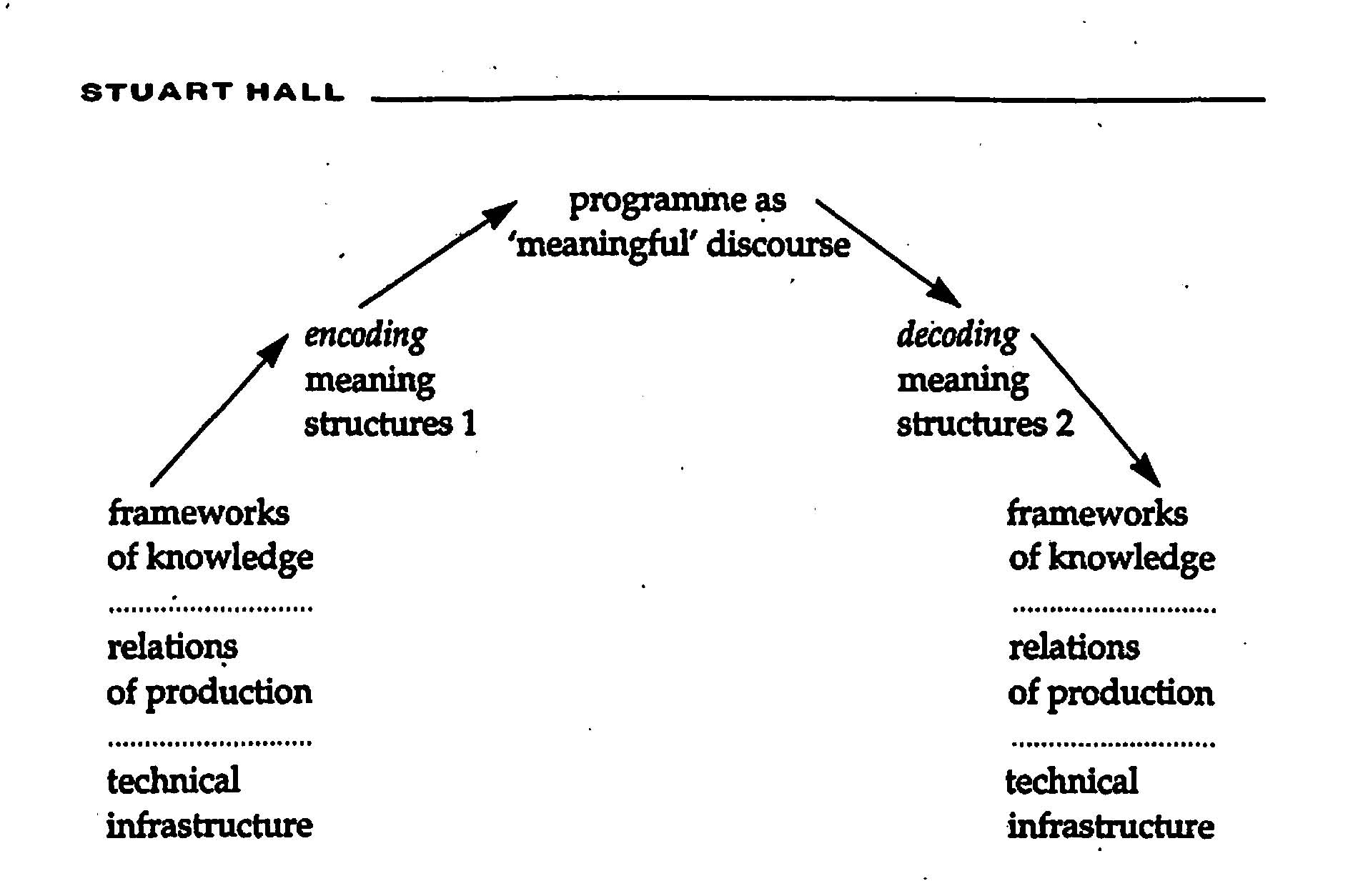
Source.
A message or sign can be understood from what it encases, the signifier and the signified, or the denotation and connotation. The science of signs, or Semiotics, was a notion fathered by Ferdinand de Saussure and Charles Pierce. The below image has key signifiers, the form which the sign takes, and signified, the concept it represents.

Source
On first viewing, I notice the darker bush area and the damage in the right corner, due potentially due to deforestation. The image is taken from what seems to be a forested area that has streams intertwined throughout. Starting to unpack the signifiers, the signified beings to comes through. The darkened bush area is a similar shape to the human lung, while the streams are likened to veins, insinuating that the trees are a vital organ for the ecosystem and the planet. Trees also produce oxygen for the human kind, furthering that reference of its significance. The brown, dead area of the ‘lung’ is representative of the harm deforestation is having on the planets ‘lungs’, as well as ours.
The interpretation of this advertisement is solely dependant on the viewers current knowledge. For example, if the audience was not aware of the what a lung looked like, or that the sparse area was from deforestation, or that trees produced oxygen, the message would be decoded differently. If the audience knew that WWF is a not for profit organisation for environmental preservation previously, then that would also contribute to their understanding of the ad and its context.

Source
A writer, or artist or graphic designer or essentially anyone who wants to use signs to send a message, can use all of the thinkable signifiers, as obvious as they may seem, but the viewer is not guaranteed to take away exactly what the sender intended. When composing a piece of media, it is important to keep in mind that interpretation is unique to an individual, and miscommunication and arise from this.
References
University of Twente 2017, ‘Semiotic Theories’, viewed 26/03/2019
Daniel Chandler 2017, ‘Semiotics for Beginners’, viewed 26/03/2019
Kropp, Evan L. 2015, ‘Kome: (Budapest) Using Social Scientific Criteria to Evaluate Cultural Theories: Encoding/Decoding Evaluated’ Vol. 3, pages 10-26, viewed 26/03/2019
 PAIGE SUTTON
G’day Paige! Your post is great as i found it really easy to follow and read. Semiotics was explained thoroughly and simply from start to finish. I feel as if I had no prior knowledge about semiotics and reading signs i’d be able to walk away after reading this knowing the basics about what people are trying to tell me through images ! For example if the WWF watermark was not in the bottom right hand corner of this particular campaign it could almost be considered as a tobacco farming protest :0 Also side note but your blog post does not allow me to comment unless I add my email/name below, as you have notified me I figured I would return the favour !
LikeLiked by 1 person
Scratch that last comment, it only wants those details if I am not logged in. My bad !
LikeLiked by 1 person
I really like this post; you did a great job at intertwining several media theories into a single topic. It was a smooth and easy read, while simultaneously in-depth for what matters. While what you covered does seem like a re-statement of lecture content, I do absolutely agree with what you said about how the viewer is not guaranteed to take away the same message. And honestly it’s seems these days (at least in an artistic context) people seem to be forgetting that; ‘subjectiveness’ itself is being disputed (which is stupid). Nevertheless, good job! Although I suggest proofreading a little more.
LikeLike